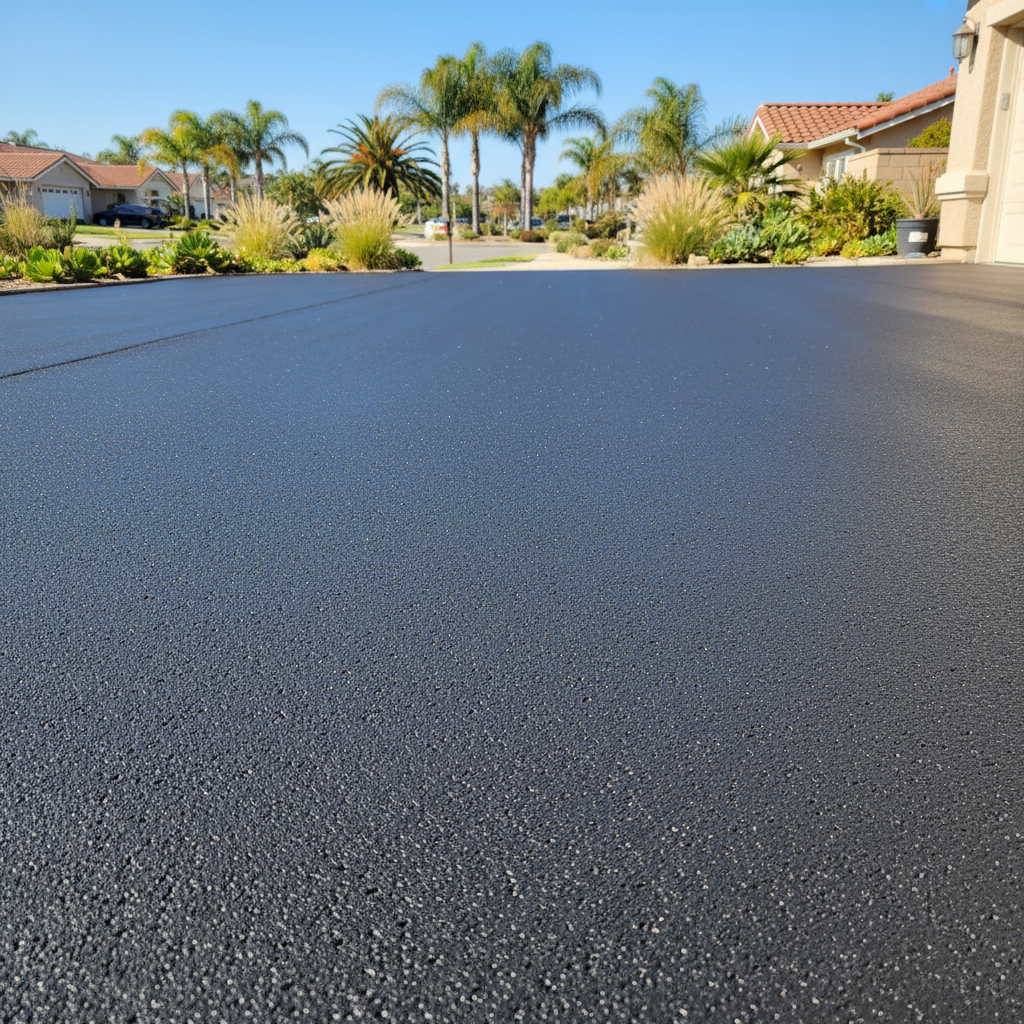
When property owners look into ways to protect an asphalt driveway or private road around San Diego County, Slurry Coating usually comes up as a heavy-duty option. Over the years running Oceanside Precision Asphalt, our team has heard just about every question regarding this process. Here is a look at the most common things property owners ask us, answered straight without any sales pitch.
What exactly is a Slurry Coating and how does it work?
A Slurry Coating is a thick, protective blanket poured over your existing pavement. It is a cold-mix blend of asphalt emulsion, water, mineral fillers, and carefully graded fine aggregates. Instead of just painting the surface like a standard sealcoat, Oceanside Precision Asphalt applies a substantial layer that fills in minor surface voids, locks in loose aggregate, and gives you a fresh, deep black wearing surface. In neighborhoods out near Fire Mountain or rolling hills toward San Luis Rey, the intense afternoon sun beats down hard on asphalt, making this kind of protective barrier very important.
How is Slurry Coating different from regular sealcoating?
The main difference comes down to thickness and what is actually in the mix. Standard sealcoat is a liquid-based sealer that acts more like a stain or a coat of sunscreen for your pavement. Slurry Coating contains actual crushed rock aggregate, meaning it adds physical thickness and structural wear resistance to the surface. If your driveway is just starting to fade, regular sealcoat might do the trick. But if your surface is starting to feel rough, or you are seeing small stones pop loose from the binder, Slurry Coating provides the extra muscle you need for your asphalt in Oceanside.
Will Slurry Coating fix the cracks and potholes in my driveway?
Slurry Coating will not fix structural issues, and that is a common misconception. Slurry Coating is strictly a preventative surface treatment, not a structural fix. If you have deep cracks, alligator cracking, or sunken potholes, putting a slurry over them will not solve the underlying problem because the cracks will just reflect right back through the new material in a few months. Oceanside Precision Asphalt always handles crack sealing and structural asphalt patching first before any Slurry Coating goes down on surfaces in Oceanside, CA.
How long does a Slurry Coating last in the Oceanside climate?
Around our coastal microclimate, property owners can generally expect a good Slurry Coating to hold up for 4 to 7 years. Oceanside Precision Asphalt deals with unique local challenges here, including marine layer moisture rolling off the Pacific and morning salt fog that can interact with unprotected asphalt. UV rays also play a major role in drying out the liquid binders. Keeping up with routine maintenance and washing away chemical spills or heavy debris will help you get the maximum lifespan out of your Slurry Coating application in Oceanside.
How long do I have to keep my cars off the new surface?
Property owners need to stay off the new Slurry Coating for at least 24 to 48 hours. Because it is a thicker mix containing aggregate and moisture, it takes longer to cure than a thin coat of traditional sealer. The exact curing time depends heavily on temperature and humidity. If it is a cool, foggy morning near the coast, the Slurry Coating might need a bit more time to set up properly compared to a hot, dry afternoon inland.
Can I apply a Slurry Coating myself to save money?
Oceanside Precision Asphalt does not recommend a do-it-yourself approach for this service. Unlike DIY sealcoat buckets you can roll on yourself from the hardware store, Slurry Coating requires specialized mixing equipment, calibrated spreader boxes, and experienced operators to get an even thickness. If the mix ratio is off or it is applied too thick in some spots and too thin in others, you will end up with a messy, uneven finish that scuffs under tires or washes away unevenly. Letting our professional crew handle the logistics for your Slurry Coating in Oceanside saves you from an expensive headache down the road.